
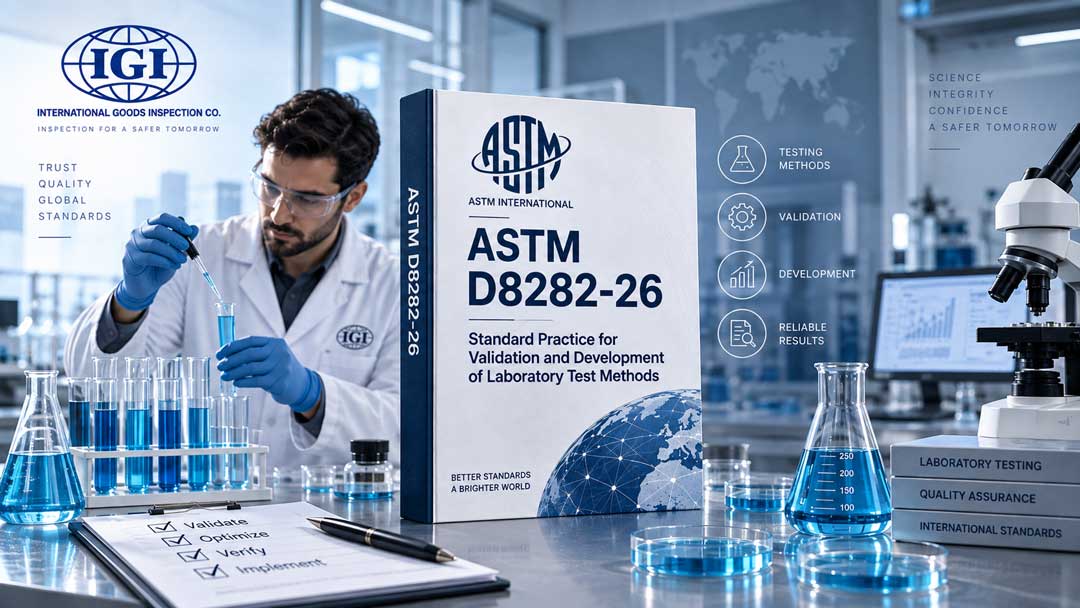
ASTM D8282-26 for Laboratory Test Method Validation and Method Development
What Is ASTM D8282-26?
ASTM D8282-26, Standard Practice for Laboratory Test Method Validation and Method Development, is an ASTM International standard addressing laboratory test method development and validation. The active edition was updated on August 31, 2026.
The standard addresses an important laboratory-quality question: how to demonstrate that an analytical method is suitable for its intended purpose and how its performance should be evaluated and documented.
Why Is Laboratory Test Method Validation Important?
Test method validation is the process of evaluating whether an analytical method is suitable for its intended application. A laboratory needs to demonstrate that the selected method can measure or evaluate the intended characteristic of a sample or product with appropriate performance.
Method selection is not limited to having a written test procedure. Sample type, measurement range, target characteristic, equipment and intended use of the result can all affect method suitability.
Key Topics in ASTM D8282-26
According to ASTM, the practice provides a framework for method characterization, method validation and method transfer. Key concepts include:
- Fitness for purpose: demonstrating that a method is suitable for its intended purpose and application
- Method characterization: evaluating the performance of a test method
- Method validation: evaluating and demonstrating method performance
- Method transfer: transferring a method while maintaining expected performance
- Reproducibility: enabling another analyst to reproduce the procedure under defined conditions
- Documentation: recording methods, evaluations and results
What Does Fitness for Purpose Mean?
A central principle of ASTM D8282-26 is fitness for purpose. ASTM explains that demonstrating that an analytical method is fit for its intended purpose and application is achieved through method characterization and validation.
In practical terms, a laboratory needs to demonstrate that the selected method matches the purpose for which the test result will be used. This is particularly relevant when laboratory results support technical decisions, quality control or product specification assessment.
Reproducibility of Laboratory Test Results
Reproducibility is an important consideration in laboratory testing. A test procedure should be defined and documented so that another analyst can perform the procedure under the specified conditions and obtain comparable results.
ASTM states that the resulting standard operating procedures should be reproducible under the same conditions by a different analyst working in a different laboratory.
Laboratory Test Method Development
Not every existing method is automatically suitable for every sample or analytical application. A laboratory may encounter a sample type, characteristic or measurement range for which an existing method requires further development or adaptation.
In such cases, method development should be performed in a controlled manner and the performance of the developed method should be evaluated for its intended application.
Test Method Transfer
Moving an analytical method from one laboratory to another may require evaluation because equipment, analysts, laboratory conditions and other factors can influence test performance.
ASTM D8282-26 includes method transfer within its framework alongside method characterization and validation.
Which Types of Laboratory Methods Are Covered?
The official ASTM scope states that the practice provides procedures for characterization, validation and transfer of biological, chemical, spectroscopic and physical-based laboratory test methods.
The exact validation variables depend on the nature of the method and its intended application. Chemical and microbiological methods, for example, may require consideration of different performance characteristics.
ASTM D8282-26 and Laboratory Result Quality
Laboratory results have greater technical value when the method used is appropriate for its intended purpose and its performance has been properly evaluated and documented.
Method validation works together with personnel competence, suitable equipment, controlled laboratory conditions, quality control and documentation as part of a professional laboratory testing process.
Relationship with ISO/IEC 17025
Method validation and laboratory method control are closely related to the broader principles of laboratory competence. ISO/IEC 17025 provides an internationally recognized framework for the competence of testing and calibration laboratories.
Laboratories operating within formal quality systems need defined and documented processes for selecting, using, evaluating and controlling test methods.
Importance for Goods Quality Control
Laboratory test results are used across many supply chains to evaluate product characteristics and quality. The reliability of these results depends on factors such as the test method, equipment, sampling, test conditions and quality control.
Applying structured principles for test method development and validation can help laboratories demonstrate that their methods are appropriate for the intended application and properly documented.
IGI Laboratory Services
International Commercial Goods Inspection Company (IGI) provides specialized laboratory services alongside its inspection activities. Its laboratory capabilities cover areas such as chemical testing, food and microbiology, metallurgy and mechanical testing.
Learn more about IGI Laboratory Services.
For specialized chemical testing, visit the IGI Chemical Laboratory page.
Conclusion
ASTM D8282-26 provides a framework for laboratory test method characterization, validation, development and transfer. Fitness for purpose, reproducibility and documentation are among the important concepts addressed by the standard.
Because laboratory results can support quality control and technical decision-making, appropriate evaluation and validation of the test method is an important part of producing reliable laboratory results.
Source: ASTM International – ASTM D8282-26, Standard Practice for Laboratory Test Method Validation and Method Development.